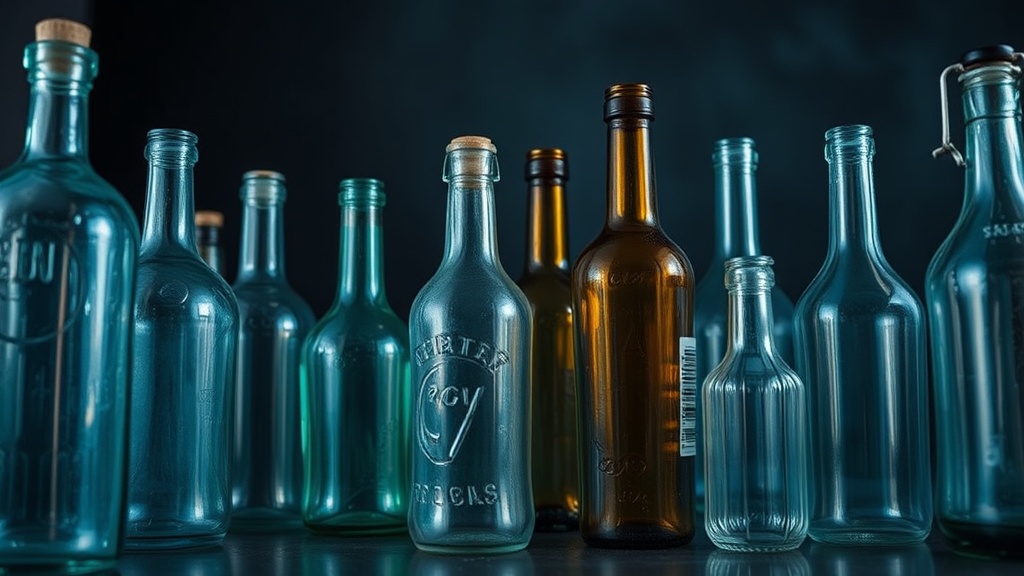
Why Light Exposure Destroys Your Glass Bottle Collection

The Myth of the Indestructible Bottle
Most collectors assume that if a piece of glass isn't being physically handled or dropped, it's safe from damage. This is a mistake. While glass seems inert, it is actually quite sensitive to its environment. A collection sitting in a sun-drenched window might look beautiful for a few months, but that constant exposure to light and heat is a slow-motion wrecking ball. Understanding the physics of light and heat is the difference between a collection that lasts a century and one that degrades in a decade.
We're talking about more than just a little fading. We're talking about the chemical stability of the glass itself and the pigments used in certain types of soda-pop or medicine bottles. If you don't control your environment, you aren't just displaying your finds—you're watching them age prematurely.
How Does UV Light Damage Colored Glass?
You might think that a deep cobalt blue or a thick amber glass is immune to light, but that's not the case. Ultraviolet (UV) radiation carries high energy that can trigger chemical reactions within the glass structure. In some vintage bottles, especially those with certain colored coatings or internal-color-making additives, UV light can cause a process called solarization. This changes the actual color of the glass over time, often turning clear glass slightly yellow or making certain blues appear duller.
This isn't just about the glass changing color; it's about the light breaking down the chemical bonds of the additives. For collectors of specific medicinal or soda bottles, this is a disaster. A bottle that was once a vibrant, crisp green might turn a murky, brownish hue if left under direct sunlight for too long. This isn't a permanent change once it happens—it's a fundamental shift in the material's chemistry. You can check the Library of Congress preservation guidelines to see how light-sensitive materials are treated in professional archives.
Beyond that, heat is the silent partner in this destruction. Light doesn't just bring UV rays; it brings thermal energy. When a glass bottle sits in a sunny window, the air inside the bottle expands. This creates internal pressure that, combined with the temperature fluctuations of day and night, can lead to stress fractures. This is especially dangerous for older, hand-blown bottles that may have microscopic structural flaws already present from the manufacturing process.
Can Heat Affect the Seals on Vintage Caps?
If your collection includes more than just glass—specifically vintage bottle caps or metal-topped vessels—heat is even more dangerous. Metal expands and contracts at different rates than glass. If you keep a collection of vintage cap-topped bottles in a warm attic or a room with high sun exposure, you're inviting disaster. The constant expansion and contraction can loosen the seal, or worse, cause the metal to oxidize rapidly.
Rust isn't just an eyesore; it's a structural failure. When moisture gets trapped under a cap due to thermal expansion, it creates a micro-environment of high humidity. This accelerates the corrosion of the metal. If you're seeing a slight ring of rust around the neck of a bottle, it's often a sign that the temperature swings in that room are too extreme. A stable, cool environment is the only way to keep those metal components in top-tier condition.
What Is the Best Lighting for Displaying Collections?
The goal isn't to display your items in a dark cave. You want to see the color and the shape of your bottles. The trick is to use light that lacks the harmful UV spectrum. LED lighting is the gold standard for modern collectors. Unlike older incandescent or fluorescent bulbs, LEDs produce very little heat and almost zero UV radiation. They are much safer for the delicate chemical makeup of vintage glass.
When setting up a display, follow these three rules of thumb:
- Avoid Direct Sunlight: Never place a display case or shelf where the sun hits it directly during the day. Even a high-quality UV-filtering window film won't solve the heat problem.
- Use Controlled Light Sources: Stick to LEDs. If you must use other lighting, ensure they are far enough away from the bottles to prevent localized heat buildup.
- Monitor Temperature: A consistent temperature is better than a perfectly cool one. Fluctuations are what cause the most mechanical stress on the glass and its caps.
If you are looking for more technical data on how light interacts with various materials, the National Park Service provides extensive documentation on preserving cultural and historical objects. Their resources are a great way to understand why environmental control is a non-negotiable part of the hobby.
Think of your display as a controlled environment, not just a shelf. A bottle that looks great under a bright, hot spotlight might look different—and be physically weaker—in five years. Protecting your investment starts with the light you choose to use. If you're serious about the longevity of your pieces, treat them like the historical artifacts they are, rather than just pretty objects on a shelf.