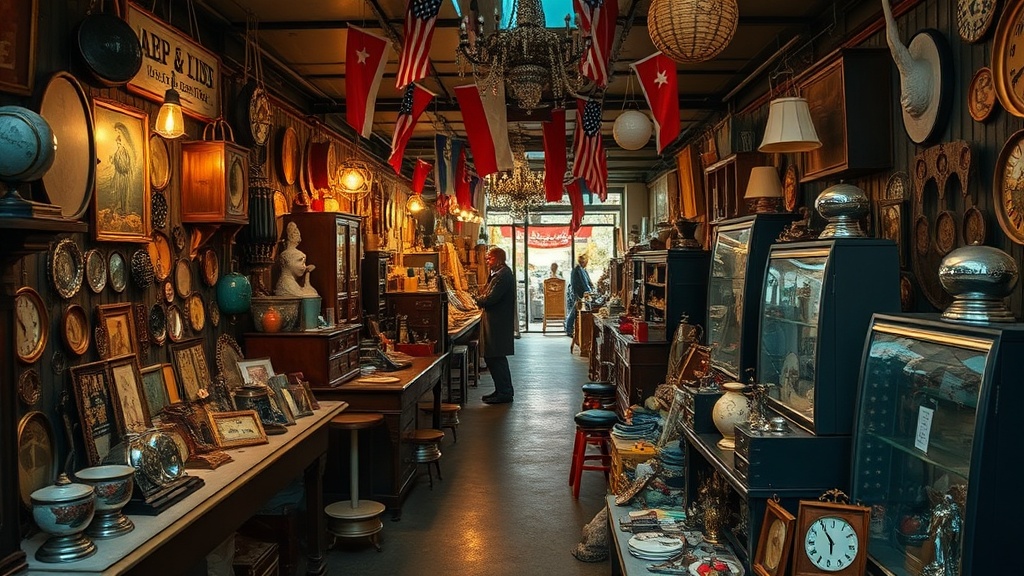
Which Flea Market Finds Are Worth More Than Their Price Tag?

This listicle reveals eight specific types of bottles, caps, and small collectibles that consistently outperform their asking price at flea markets. You'll learn what visual cues separate junk from gems, which eras and materials command premiums, and how to negotiate with sellers who don't know what they've got. Whether you're hunting in Burlington or browsing rural markets across Ontario, these are the items that deserve a second look—and sometimes a spot in your collection.
What Should You Look for in Pre-1960s Soda Bottles?
Old soda bottles are everywhere at flea markets—tucked in cardboard boxes, lined up on folding tables, sometimes half-buried in milk crates. Most aren't worth much. But the ones that are? They're hiding in plain sight.
Look for embossed lettering rather than painted labels. The embossing tells you the bottle was made before the 1960s, when screen-printing took over. Check the base for manufacturer's marks—numbers and letters stamped into the glass that identify the factory and often the year. A "Duraglas" mark with a two-digit number indicates 1940s production. Older bottles might show "IGCo" (Illinois Glass Company) or similar markings from regional manufacturers that no longer exist.
Color matters more than you'd think. Clear and amber bottles are common. Aqua-tinted glass from the 19th century? That's where value lives. Same with cobalt blue or amethyst—soda bottlers used these colors for specific flavors or medicinal claims, and collectors pay premiums for unusual hues.
Condition is straightforward: no chips, no cracks, no clouding that won't wash off. But here's the thing—some flea market sellers price all old bottles the same. A 1920s Hutchinson stopper bottle (the kind with a wire bail and rubber gasket) might sit next to a 1970s returnable for the same five-dollar tag. That's your opportunity. Hutchinson bottles in good condition routinely sell for $40 to $150 depending on the bottler's location and rarity.
Why Do Some Bottle Caps Command Surprising Prices?
Crown cork caps—the standard crimped metal caps we all recognize—were invented in 1892. Most are worthless. But certain categories break that rule, and flea markets are where undervalued examples still surface.
First, look for cork-backed caps from before the 1960s. These have a cork liner visible from underneath, unlike modern plastic-lined versions. The cork indicates age, and age in this hobby often equals scarcity. Early soda and beer caps with cork liners can fetch $5 to $25 each when the brand is documented.
Second, hunt for caps with advertising beyond the brand name. A cap that says "Coca-Cola" is common. A cap that promotes a specific local bottler, a discontinued flavor, or a limited-time event? That's different. These "generic" or "private label" caps—often featuring small-town businesses, fair promotions, or sports teams—are what serious collectors pursue.
Third, don't ignore foreign caps. European and Japanese examples from the mid-20th century show up at North American flea markets more than you'd expect. Sometimes they're mixed in with domestics, priced at a dollar or two. A 1950s Japanese beer cap with unique artwork can sell for $30 to $80 to the right buyer.
Storage matters for condition. Caps with rust spots, bent edges, or faded graphics lose value fast. Carry a small hard case—like a plastic trading card storage box—to protect finds until you get home. For more on proper storage techniques, the Bottle Cap Collectors Association maintains detailed resources.
Are Vintage Tins and Small Metal Boxes Worth Collecting?
Tobacco tins, spice tins, candy containers—these "smalls" occupy a middle ground in the collecting world. They're portable, often beautiful, and frequently underpriced because sellers see them as "old kitchen stuff" rather than collectibles.
The best finds feature lithographed artwork from known printers. Look for "U.S. Lithograph Co." or similar markings on the bottom or inside lid. These indicate quality production from the early 1900s. Tins with embossed designs (raised patterns you can feel) typically predate flat-printed versions.
Condition assessment for tins is specific. You want bright colors, minimal rust, and no denting that breaks the design. A small amount of surface rust on the base is acceptable—common, even—but rust bleeding through the lithograph kills value. Check the seams: hand-soldered seams indicate 19th-century manufacture, while machine-seamed edges suggest early 20th century.
Subject matter drives pricing more than age alone. Tins featuring Black Americana, tobacco brands that no longer exist, or products with politically incorrect names (common before the 1960s) command premiums—sometimes $100 to $500 for rare examples. But be careful: reproductions of desirable tins flood the market. Originals have specific wear patterns, correct typography, and manufacturing details that fakes get wrong. The Antique Tins Authentication Guide provides excellent comparison photos.
How Can You Spot Valuable Small Advertising Items?
Match safes, pocket mirrors, pinback buttons, and miniature celluloid advertising pieces—these are the definition of "smalls." They're easy to overlook in the chaos of a flea market. That's exactly why you shouldn't.
Celluloid items from the early 1900s have a distinctive feel—smooth, slightly flexible, with a depth of color that modern plastics can't replicate. They're often shaped like tiny products (a pocket mirror shaped like a perfume bottle) or feature elaborate designs for brands long forgotten. The condition challenge here is different: celluloid cracks, warps, and can develop "disease" (a crystalline breakdown that looks like frost). Pass on pieces showing these issues unless the price is essentially free.
Pinback buttons follow their own value logic. Political buttons are well-documented and often pricey. But advertising buttons—promoting local businesses, products, or events—fly under the radar. A button for a 1930s department store in a small Ontario town might cost you $2 at a flea market and sell for $40 to collectors specializing in that region.
Match safes (small metal cases for carrying strike-anywhere matches) represent a collecting category that's both functional and historical. Look for sterling silver marks, novelty shapes (animals, shoes, books), and advertising engravings. A sterling match safe with a clear hallmark can be worth $50 to $300 depending on maker and condition—even if the seller has it priced as "old lighter, doesn't work."
What Role Does Provenance Play in Flea Market Finds?
Here's something most collectors learn the hard way: an item's story matters. Not in a sentimental way—in a monetary way. Provenance (documented history of ownership) can transform a $10 bottle into a $100 bottle.
At flea markets, provenance often arrives accidentally. A seller might mention the estate the items came from. They might have a box of bottles labeled with an address, or show you photos of the collection in situ. This information is valuable. Write it down. Photograph the context if possible.
Regional connections amplify value. A bottle from a defunct Burlington bottler means more to local collectors than the same bottle from another city. A cap promoting a 1950s Toronto event outperforms a generic equivalent. When you find these pieces, you're not just buying an object—you're buying a documented piece of regional history.
The key is asking questions. Most flea market sellers know something about their stock. Some know everything. A two-minute conversation can reveal that the "old bottles" on the table came from a demolished pharmacy, or that the tins were a grandmother's spice collection. That context transforms your purchase from a guess into an informed acquisition.
When Should You Walk Away from a "Deal"?
Not every underpriced item deserves your money. Learning what to skip is as important as learning what to buy.
Skip heavily cleaned items. That bottle someone "polished" with abrasive compound? The micro-scratches destroy value for serious collectors. The tin someone repainted to "fix" the rust? Now it's a damaged tin with incorrect paint. Original condition—even with honest wear—beats restoration almost every time.
Skip items with reproduction red flags. Modern "vintage-style" bottles often have telltale machine marks, incorrect base embossing, or glass that's too perfect. Modern caps replicate old designs but use different metal alloys and printing methods. If something feels too clean, too crisp, too cheap for what it claims to be—trust that instinct.
Skip damaged pieces unless you have a specific use for them. A cracked bottle can't be repaired invisibly. A rusted-through tin won't stabilize. A celluloid piece with "disease" will continue degrading. Buy these only if you want them for decoration, not collection—or if you're obtaining them to complete a set where condition matters less than presence.
Finally, skip pressure. The seller who claims "someone else is coming back for this" or who won't let you examine an item properly? That's not a deal worth making. Good finds exist. You don't need to compromise your standards because of artificial urgency.
Building Relationships With Flea Market Sellers
The best collectors aren't just good at identifying objects—they're good at identifying people. Regular sellers remember faces. They start setting items aside. They call you when something specific comes in.
This relationship works because it's genuine. Show interest in what sellers know. Ask about their best finds, their strangest sales. Don't pretend expertise you don't have—most veteran sellers can spot a fake, and that includes fake enthusiasm. But genuine curiosity? That's rare, and it's remembered.
Pay fairly. Haggling is part of flea market culture, but lowballing insults people who've spent hours sourcing and setting up. Offer what something's worth to you, explain why if needed, and accept no gracefully. The seller who remembers you as reasonable will show you their good stuff first next time.
Return regularly. Flea market inventory turns over constantly. The table that had nothing last month might hold your best find this month. Consistency beats intensity—fifteen minutes every weekend catches more opportunities than a three-hour binge every six months.
For additional resources on bottle and small collectibles collecting, the Society for Historical Archaeology maintains extensive reference materials on glass bottle identification and dating.