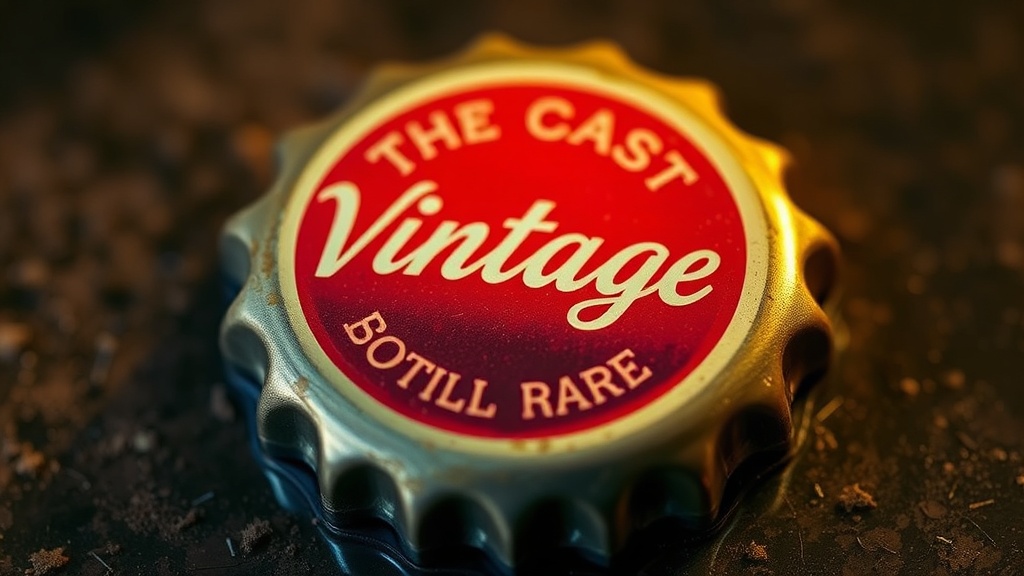
What Makes a Vintage Bottle Cap Truly Rare?

Why does a tiny piece of metal hold so much value?
Have you ever looked at a dusty, rusted bottle cap at a flea market and wondered why some collectors pay hundreds of dollars for them while others see junk? It isn't just about the metal or the design; it's about the specific era, the manufacturing process, and the scarcity of the brand. For those of us in the world of bottles, caps, and smalls, understanding the distinction between a common drugstore find and a high-value specimen is what separates a hobbyist from a serious collector. This post breaks down the specific markers that drive value in the world of vintage metal caps.
The market for metal caps is often misunderstood. People think a cap is just a cap, but the nuance lies in the material and the printing technology used. Whether you're hunting for old soda tops or industrial closures, you need to know what to look for before you spend a dime. We'll look at the physical attributes that signal rarity and the historical context that makes certain designs more sought after than others.
How do you identify a high-value vintage cap?
Identification starts with the physical inspection of the rim and the center. You aren't just looking for a cool logo; you're looking for signs of specific production methods. Here are the primary factors to check:
- The Rim Style: Older caps often have different crimping patterns than modern ones. Look for irregular edges that suggest older, less automated machinery.
- The Material: Is it heavy steel, thin tin, or a composite? The weight and the way the metal bends can tell you a lot about its age.
- Print Quality: High-end vintage caps often feature lithography that is much sharper than the cheap, stamped designs found on mass-produced items.
If you're looking for more technical details on metal aging and types, the Britannica technology archives offer great background on metallurgy, though they won't talk about specific brands. You're looking for that sweet spot where industrial history meets consumer advertising. A cap that features a defunct brand or a specific regional soda company is almost always going to be more valuable than a generic one.
Are certain colors more desirable in metal caps?
Color isn't just an aesthetic choice; it's a preservation indicator. In the world of vintage caps, certain pigments were used that have become rare due to chemical changes over time. A bright, vibrant red on a 1950s soda cap is a sign of excellent preservation, whereas a faded or chipped surface might suggest it was stored in poor conditions.
Collectors often track the "pop" of a color. A high-contrast design—like a deep blue background with white lettering—tends to stand out more in a display case. When you're out at a swap meet, don't just look at the logo. Look at the saturation of the color. A well-preserved color profile can significantly bump the price of a small metal item. If the paint is peeling or the metal is heavily pitted, the value drops significantly, regardless of how rare the brand might be.
Common Pitfalls in Cap Collecting
One of the biggest mistakes I see is people buying "repro" items thinking they are originals. The market is flooded with modern-made vintage-style caps that look great but have zero historical value. To avoid this, always check the underside of the cap. Authentic vintage caps often have much more character (and more imperfections) on the underside than modern reproductions. A perfectly smooth, clean underside is a red flag for a modern-made item.
Another issue is the "rust trap." While some patina is expected, heavy oxidation can destroy the structural integrity of the metal. If you buy a rusted cap, you might never be able to clean it without destroying the very thing that makes it valuable. Always check the degree of oxidation before you commit to a purchase. If the rust is deep and eating into the metal, leave it on the table.
What is the difference between a crown cap and a flat cap?
While both are technically "caps," they belong to different collecting circles. The crown cap—the standard crimped edge—is the most common, but the flat-top or specialized closures are where the real money is. A flat-top cap, often seen on old glass bottles, carries a different set of rules for display and care. These items are often more fragile and prone to denting.
For those interested in the history of beverage packaging, the Library of Congress digital collections have incredible records of how packaging changed over the decades. Understanding that evolution helps you realize why a certain shape or edge might be more valuable than another. It's not just about the logo; it's about the evolution of the way we drink. If you can spot a transition period—where a company moved from one style of cap to another—you've found a goldmine.
When building your collection, remember that consistency is your friend. A collection of purely crown-style caps is often more impressive than a random assortment of various closures. It shows a dedicated focus. If you're just starting, don't try to buy everything. Pick a specific era or a specific type of printing, and build from there. This focus will help you become an expert in that specific niche rather than a generalist who knows a little about everything but nothing deeply.
| Feature | Common Cap | Rare/High-Value Cap |
|---|---|---|
| Printing | Basic stamped ink | High-detail lithography |
| Edge | Standard crimp | Unique or specialized rim |
| Condition | Heavy rust/pitting | Minimal patina/clean color |
| History | Generic brand | Defunct or regional brand |
Keep your eyes peeled at those small, local events. The best finds rarely happen at big-box auctions; they happen at the small, local shows where the collectors are still digging through the bins. That's where the real treasures hide.