The 1906 Pure Food and Drug Act and the Death of the Antique "Cure" Bottle

Before 1906, your local apothecary was selling liquid lightning that was often more dangerous than the disease it claimed to treat. Some "soothing syrups" for infants contained enough morphine and alcohol to put a grown man under—permanently. The 1906 Pure Food and Drug Act didn't just clean up the pharmaceutical industry; it completely shifted the design, labeling, and manufacturing of glass bottles. For us collectors, this law creates a distinct before and after line in the sand. If you can spot the subtle changes in embossing and phrasing that happened overnight in 1906, you'll have a massive advantage when picking through estate sales or digging in old privies.
The Wild West era of patent medicine was defined by bold claims and even bolder ingredients. Manufacturers didn't have to list what was inside their tonics, which meant you could be drinking 40% grain alcohol spiked with cocaine while thinking you were just taking a "vegetable compound" for your nerves. When Dr. Harvey Wiley and his famous "Poison Squad"—a group of volunteers who ate food laced with formaldehyde and borax to prove they were toxic—finally pushed Congress to act, the glass bottle industry felt the impact immediately. This piece of history is why certain glass finds are worth five dollars while others from just a few years earlier can command thousands at auction.
How did the Pure Food and Drug Act change bottle labels?
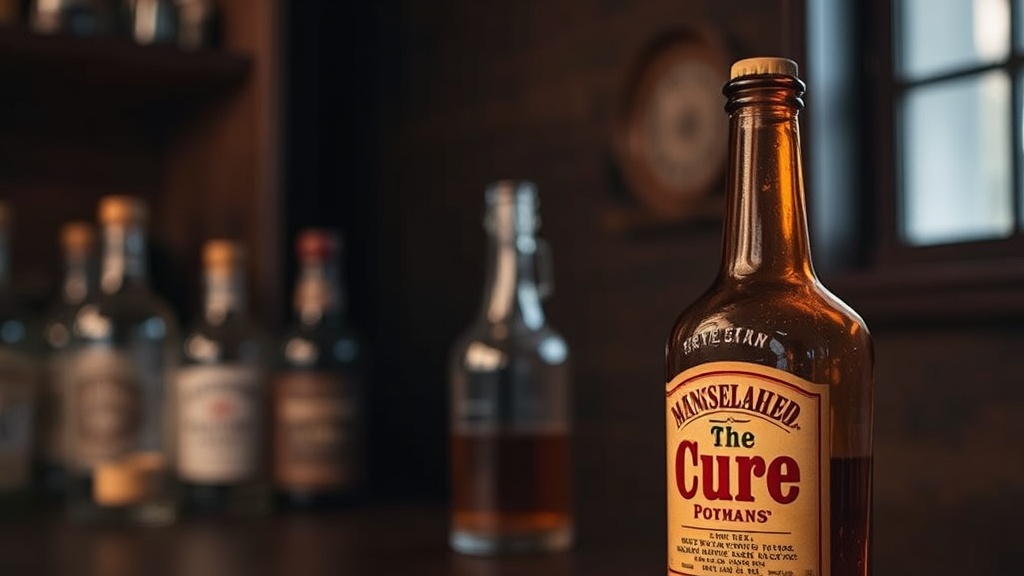
The most obvious change was the sudden disappearance of the word "Cure." Before the law passed, companies could claim their product cured everything from cancer to baldness without a shred of proof. Once the government demanded evidence for these claims, manufacturers scrambled. Most shifted their wording to "Remedy," "Tonic," or "System Restorer." Finding a bottle with the word "Cure" embossed directly into the glass is a solid indicator that the mold was made before 1906. It's a snapshot of a time when marketing was entirely unregulated and often lethal.
Along with the wording, the law forced companies to list active ingredients on the label. This led to a massive redesign of paper labels. Bottles that previously had simple, artistic graphics now had to include sobering lists of narcotics and alcohol percentages. For a collector of "smalls" and ephemera, these transitional labels are fascinating. You'll sometimes find bottles where the original "Cure" label has a smaller sticker pasted over it that says "Remedy" or lists the alcohol content. These over-labeled bottles are rare survivals because they show the exact moment the industry was forced to become honest. (You can see some of these early label designs at the FDA History archives).
The physical glass changed too. As mass production became the norm to keep up with new regulations, the quirky, hand-blown bottles of the mid-19th century began to vanish. The Pure Food and Drug Act coincided with the rise of the Automatic Bottle Machine (ABM), invented by Michael Owens. While the law didn't mandate machine-made glass, the need for standardized sizes to fit new labeling requirements meant that the era of the unique, slightly lopsided hand-blown bottle was coming to an end. Collectors generally prefer the pre-1906 "BIMAL" (Blown-In-Mold, Applied Lip) bottles because they show more character and craftsmanship than the sterile, perfectly symmetrical machine-made versions that followed.
Which "quack medicine" bottles are most valuable to collectors?
Bitters bottles remain the high-water mark for many glass enthusiasts. These were essentially flavored cocktails sold as medicine to get around temperance laws. Bottles like Kelly's Old Cabin Bitters or the figural Drake's Plantation Bitters (which looks like a four-log cabin) are highly prized. Their value comes from their elaborate shapes and deep, rich colors. While clear glass was cheap and common, a bottle in "Old Amber," "Cornflower Blue," or "Emerald Green" will always draw a crowd. If you find one with a pontil mark—a rough, jagged scar on the base where the glassblower's rod was detached—you've found something from before the mid-1860s, making it a true antique in any circle.
Specific brands that were targeted by the 1906 Act also hold special value. Products like "Kickapoo Indian Sagwa" or "Lash's Bitters" had to change their formulas and their glass. Collectors look for the "heavy hitters" of the quack medicine world—bottles that explicitly mentioned dangerous ingredients before they were banned. A bottle that once held "Cocaine Toothache Drops" is a dark but vital piece of medical history. The more outrageous the claim on the bottle, the higher the price tends to go. You can find detailed identification guides for these types of bottles at the Society for Historical Archaeology website.
Don't overlook the manufacturing defects either. To a casual observer, bubbles in the glass or a "whittled" texture look like mistakes. To a bottle hunter, these are signs of age and character. Seed bubbles (tiny air pockets) and stretch marks near the neck tell the story of a glassblower working in a hot, crowded factory long before automated machinery took over. These defects are much more common in pre-1906 glass, and they add a tactile quality that modern glass just can't replicate. When you hold a 150-year-old bitters bottle, you're holding something that was literally shaped by human breath.
Why is the "Cure" versus "Remedy" distinction so important for pricing?
It all comes down to the legal window of production. When the law changed, thousands of glass molds became obsolete. Some thrifty manufacturers kept using their old molds but ground off the word "Cure," leaving a faint, ghost-like blur on the glass where the word used to be. These "ghost-altered" bottles are a niche favorite because they represent the industry's desperate attempt to save money while complying with the new sheriff in town. A bottle with the full "Cure" embossing is almost always worth more than its "Remedy" counterpart because it represents a shorter, older production window.
Pricing is also driven by the survival rate of the packaging. Because most medicine bottles were tossed into backyard trash pits or privies, the paper labels usually rotted away a century ago. This means the embossing on the glass is often the only way to identify the piece. If the glass doesn't say "Cure," and the label is gone, you might never know if it was a pre-act or post-act bottle. This uncertainty drives down the price. However, if the word "CURE" is standing out in bold, raised letters, there's no doubt about its age. It's an ironclad guarantee of its historical context. (For deep dives into bitters pricing, Peachridge Glass is an excellent resource).
The shift also affected the "smalls" that accompanied these bottles. Before 1906, you might find ornate silver medicine spoons or tiny glass dose cups that were often sold alongside the larger tonics. These items are becoming harder to find because they weren't always tossed in the trash like the bottles were. A complete set—a pre-1906 embossed bottle with its original dose cap—is a holy grail for collectors. It shows a complete picture of how medicine was consumed before the government stepped in to tell us that maybe, just maybe, giving babies morphine wasn't the best idea. Collectors are increasingly looking for these companion pieces to tell the full story of the 19th-century medicine cabinet.
Looking at the market today, the 1906 Act remains the most significant milestone for dating American glass. While some bottles from the 1910s and 20s are beautiful, they lack the "danger factor" of the earlier era. The transition from the lawless "Cure" era to the regulated "Remedy" era changed the aesthetic of the American shelf forever. It moved us from the dark, mysterious glass of the Victorian age into the clear, transparent world of modern medicine. For those of us who prefer the shadows, the pre-1906 bottles will always be where the real history hides. Keep your eyes peeled for those embossed letters; they're the key to finding a piece of the past that the government tried its best to regulate out of existence.