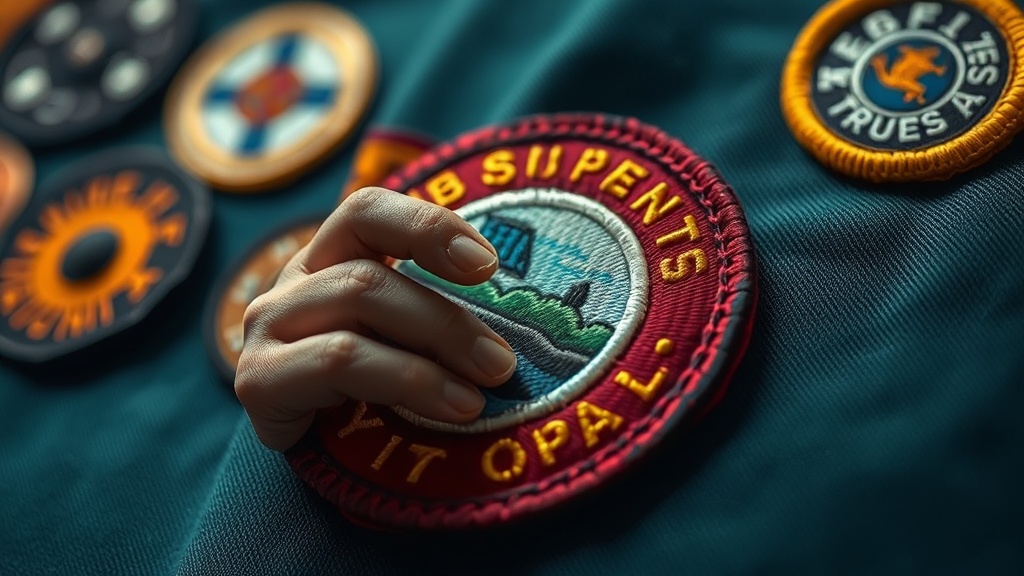
Keeping Vintage Patches Vibrant and Secure: A Collector's Preservation Manual

The common wisdom suggests that once a vintage patch finds its place on a jacket or display board, its preservation is largely complete. Many collectors believe that the initial act of securing an embroidered badge is the final step in its long-term care. However, this perspective overlooks the ongoing threats of environmental degradation and improper mounting, which can slowly diminish the very vibrancy and historical value you aim to protect. True preservation isn't a one-time event; it's an active, informed commitment to safeguarding these miniature textile treasures from the silent, insidious forces that seek to fade, fray, and decompose them. Understanding these threats and implementing thoughtful care strategies ensures your collection remains a testament to history, craftsmanship, and personal stories for generations to come.
How do environmental factors harm fabric collectibles?
The world around us, while often unnoticed, presents a constant barrage of challenges to delicate textile collectibles like vintage patches. Environmental factors are arguably the most significant—and often underestimated—contributors to degradation. Light, for instance, is a primary culprit. Both natural sunlight and artificial light sources emit ultraviolet (UV) radiation, which acts as a powerful catalyst for chemical reactions within fabric dyes and fibers. Over time, continuous exposure to UV rays irrevocably fades colors, yellows whites, and weakens the structural integrity of threads, making them brittle and prone to breakage. Imagine a patch vibrant with reds and blues slowly bleaching into pastel ghosts; that’s the silent work of unchecked light exposure.
Temperature and humidity fluctuations also play a considerable role in a patch's demise. Extremes of either, or rapid shifts between them, can be disastrous. High humidity encourages the growth of mold and mildew, which manifest as unsightly spots and can even consume organic fibers. It also attracts pests and can cause dyes to bleed. Conversely, overly dry conditions can make fibers brittle and prone to cracking, especially older threads or those with natural sizing. Think of a wooden beam drying out and splitting—textiles experience similar stresses at a microscopic level. The ideal environment for textile preservation is a stable one, typically around 68-72°F (20-22°C) with 45-55% relative humidity.
Pests are another major concern for any textile collector. Moths, carpet beetles, silverfish, and even rodents view natural fibers as a food source or nesting material. A single undetected infestation can cause irreparable damage to a cherished patch collection. Regular inspection, maintaining cleanliness, and storing items away from food sources are your first lines of defense. Dust and atmospheric pollutants, such as those found in urban environments or even just circulating indoors, also pose a threat. Dust particles, though seemingly innocuous, can be abrasive, scratching delicate fibers. They also carry microscopic pollutants that can settle into the fabric, leading to permanent staining or chemical reactions that accelerate degradation.
Finally, and perhaps most directly, improper handling contributes to significant wear and tear. The oils, dirt, and acids from our skin can transfer to patches, leaving residues that attract grime and accelerate deterioration over time. Always handle patches with clean, dry hands—or, better yet, use clean cotton gloves—to minimize direct contact. Every touch, every adjustment, introduces a risk. Being mindful of these pervasive environmental elements is the first, crucial step toward effective long-term preservation. For more detailed insights into textile conservation best practices, resources like the